


The smoke curled up and danced in the wind before spreading out. The embers glowed red as a quick burst of air fanned it. I watched the meat sizzle as it was placed over the hot coals and was cooked slowly. The crusty black grill was full of meat and glowing coals. People were gathered around giving their orders and choosing from the wide variety of barbecue products. This is the Filipino style of barbecue, where the food from the grill reached your table in ten minutes. Take a walk around the city of Cebu at night and you will see barbecue stations glowing on the streets like Christmas lights huddled together side by side in one food area or in competition with each other by just a few meters apart. With the numerous barbecue establishments in Cebu, it seems like a notable theory that barbecue has played a part in shaping the Filipino culture. Before I list how barbecue has shaped the Filipino culture let us define the method of barbecueing. According to the website http://www.bbqmyths.com/grilling.html, barbecue “... uses indirect heat or low-level heat to cook foods - usually meats.” Some people might say that with barbecue, you need to take time to let the meat cook fully but since there is really no inventor of barbecue, it is a hit and miss method of cooking. However, in most barbecue businesses, details of food preparation include grilling the meat half-cook prior to putting them on display for fast service as orders come in from customers at peak meal times.
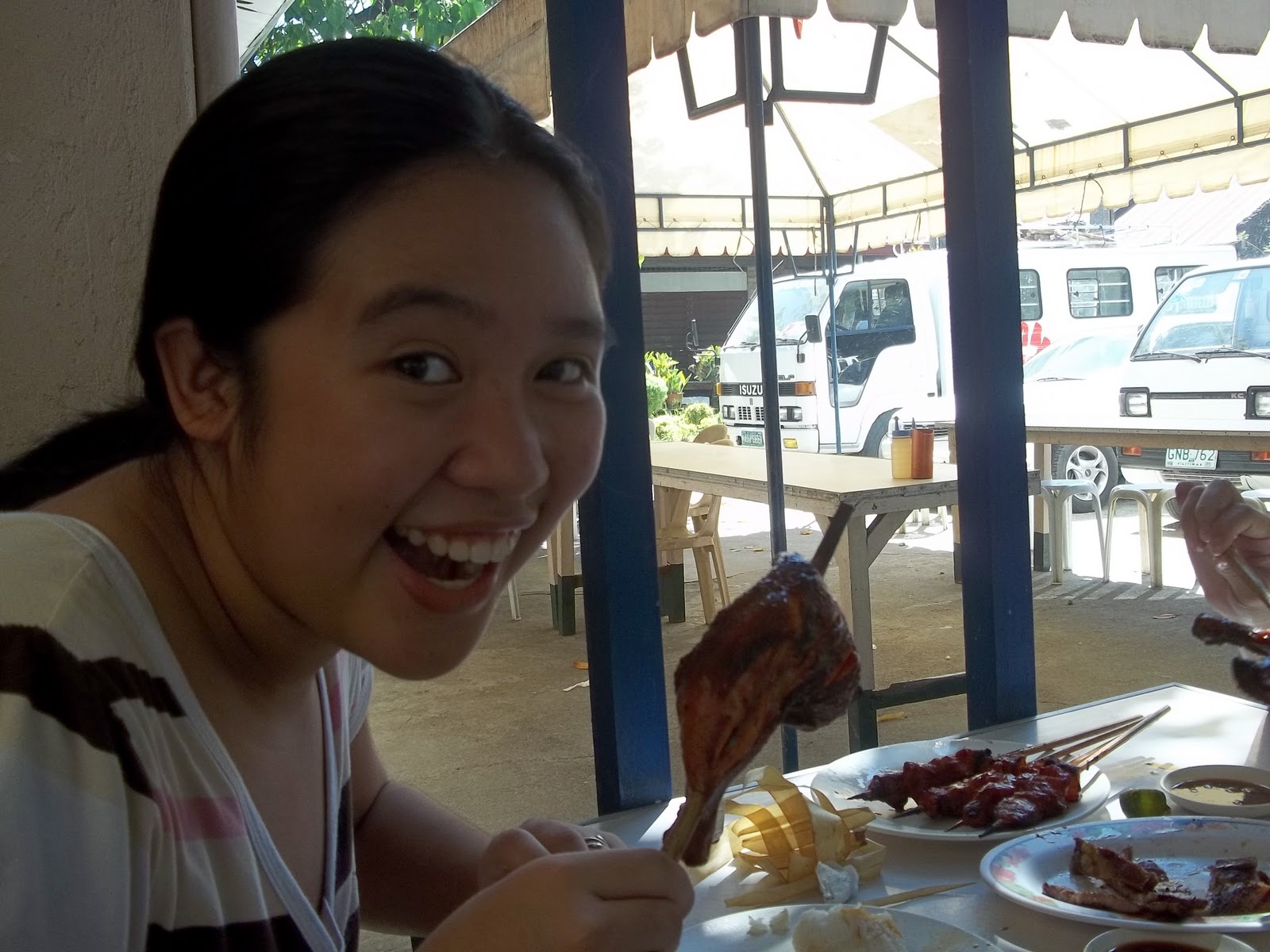
In the Philippines, barbecue has encouraged a people-oriented society. Sit down in one of the many big barbecue stations in Cebu, like Larsian's near Fuente Osmena – Cebu City's rotunda or Matias in A.S. Fortuna, Mandaue City. Observe how almost all types of people are drawn to these barbecue stations. People from all walks of life— ordinary people on the streets, students, teachers, office workers and other professionals, come to these places not just to satisfy their hunger but more so to spend time with their family or friends. A 'barbecuhan', so called in the local dialect, is not a formal place and thus people can relax and in a sense, be themselves. A lot of times in traditional Filipino way of eating, people use their fingers to savor the barbecue of their choice along with the 'puso' or heart-shaped boiled rice packed in woven coconut leaves. Without the formality of spoons and forks, it seems that a lot of people are more prone to talking and laughing, although this has never been proven by a study.
Another factor that draws people to the barbecue places is the fact that it is a cheaper alternative to fast-food restaurants like McDonalds or Mang Inasal. McDonalds also serves finger foods like fries and hamburgers but the difference between them and the 'barbecuhan' is the type of food offered and the range of prices. McDonalds, being an American-influenced fast food, is a lot more expensive since a hundred pesos can only buy, more or less, one burger meal. Mang Inasal is also a fast-food restaurant focused on the barbecue industry. However, its prices are a lot higher than the barbecue places on the streets. One advantage it offers is a cleaner, airconditioned place and better hygiene for those who want to experience Filipino styled-barbecue without the danger of health problems.
In this world of high technology where everything is fast, fast, fast, barbecue seems to have fit in rather nicely. Its availability and convenience have made it a booming industry in Cebu. All a person has to do is pick out which barbecue he or she finds interesting, hand it over to the cook and wait for it. While dining in, one has the privilege of a few minutes talk with one's companions and then the barbecue arrives in around ten to fifteen minutes, which is not too long a wait. If one would like to bring his order home, he can simply wait and watch his order being cooked. Drawing on experience, it is quite enjoyable to take out a barbecue meal (complete with puso) and to eat it in a car, specifically in a multicab or pick-up type of vehicle with friends and family. As the car moves along you try to balance the rice on your lap while holding the barbecue in one hand. As the car rumbles and bumps along, the barbecue is passed among your fellow diners. Clean-up is a breeze since the only thing left are the sticks and the coconut palm fronds from the puso. On family outings in the beach, barbecues are a favorite mainstay which are conveniently prepared on the beach front and served hot to hungry, dripping wet swimmers.
One thing I admire about the barbecue stations is the fact that there are no fussy glass walls separating you from the cook or the grill. You can watch how the pork gradually gets smaller, how the oil bubbles out of the chorizo when it is sliced, how the cook deftly brushes the meat with oil and ketchup. Plus you can observe how the coals glow ruby red when the cook fans the grill with a piece of cardboard or the locally-woven anahaw fan to put out the flame or to heat up the coals. However, one disadvantage to the method of barbecueing in general is the smoke. Big billows of smoke or small wisps of them coming from the grill often leave a smoky smell on your clothes if you stand too close. So, feel free to observe but beware of the smoke.
Let us now take a closer look at the business aspect of barbecue. Small roadside barbecue operations like that of Mr. Julius Lao of Ibabao-Estancia, Mandaue City is the more common business venture on barbecues. His barbecue station has continued to generate income since its establishment seven years ago. He usually buys his ingredients and meat from the mercado or wet market nearby and preparation takes around six hours before they open up at four thirty in the afternoon. He caters to dine in customers for whom he provides three tables by the roadside and mostly to neighbors who prefer to just take away their orders. He serves a wide variety of barbecue product line at very low prices and in small quantities such as chicken intestines, head, liver and gizzard, cubed blood, chicken legs and wings, pork barbecue, hotdogs, chorizo and longaniza and dried nocus. Closing time is at ten in the evening and in between Mr. Lao is helped by his mother. When asked for any advice for aspiring barbecue entreprenuers, he answered that it was very easy to begin a barbecue station and his usual capital for one day is around P1,000. If barbecue outlets are easy to put up and they generate income, it is easily a good way of making jobs. How does generating jobs help in revealing the Filipino values? I believe that Filipinos really are hard working but at times this cannot be seen since there are not enough jobs to go around. So, instead of sitting idle at home, Filipinos should set up small enterprises that are able to generate income to support the family like the popular barbecue stalls.
On the other hand, Mrs. Prudy Perez of Matias Barbecue shared that their family business of selling different types of barbecues started around 1996 and is still operational and booming today. This shows that the barbecue business is really very popular amoung the 'Sugbuhanon', a local word for Cebuanos. Their numerous customers have been able to support a family and their team of workers while in turn satisfying their loyal customers. For a big barbecue operation like Matias, their different product lines include pork belly, sliced pork on sticks, chicken legs, wings and breast, chicken liver and gizzard, chorizo and grilled whole fish. They are displayed in big basins from which customers choose. Due to the huge volume that they sell, they have sub-contracted the preparations of the product which include slicing the meat, marinating, putting them on a stick and getting them half-cooked. Thus, the benefit of the business extends to suppliers and sub-contractors. This reflects the entreprenurial skills of the Filipinos where they show their ability to establish networks with loyal friends and families concerning the business. The fact that Matias is operating in the front yard of the family property, reveals the ingenuity of the Filipinos in using their available resources. By using what they had, the family has been able to cut down on costs because all they needed to supply was the tables, benches, washing area, and food. Matias' operating hours start from 11:00 am until 10:00 pm. Peak hours would be during meal times at 11:00 a.m. to 2:00 p.m. for lunch and 5:00 p.m. to 8:00 p.m. for dinner.
When barbecue is mentioned usually the image of steaks and burger patties come to mind. However, the Filipino style of barbecue offers a wide variety in terms of shape or size and taste. Some examples of the different shapes and sizes that are rather unusual are the chicken liver, blood—looking like squares of reddish brown earth, chicken head cut in half and intestines—thin and flesh colored zigzagging on the stick. Fish, pork and chicken are the meats usually barbecued and eaten.
Another characteristic of Filipino barbecue in Cebu is the 'puso' that must be eaten with it. It is a heart-shaped cooked rice popular here in the Visayas. Coconut palm leaves are woven together to make a container where the rice is boiled. When served, all that needs to be done is to open the 'puso' through the slit made at its side. This is a very fast and efficient way to serve rice since it does not need to be scooped out of the rice cooker and carried back and forth on plates. Also, as mentioned before, this preparation makes cleaning up very quick and in some places the empty wrapper is the basis of how much you have to pay. They do this by counting the left behind 'puso' wrapper together with your order of barbecue.
Barbecue taste ranges from sweet, salty, sour and spicy. The main seasoning usually found in all barbecue stations is ketchup and soy sauce with a choice of kalamansi or chili. Many other Filipino dishes also have either ketchup or soy sauce as an ingredient. For ketchup-using dishes, there is mechado, sweet-style spaghetti and afritada. Adobo, humba and pancit fall under the soy sauce using dishes. So, in a way , barbecue has the components of several well-loved dishes eaten by millions of Filipinos. The smoky taste of barbecue must also tickle the Filipino pallette because there are many other food types prepared with the use of smoke. Examples are the tinap-anan and the smoked bangus, quite popular in Luzon.
Barbecue is hardly noticeable among the many different variations of food found around the world but by observing how it shapes Filipino values and culture, I have seen many different characteristics that make me proud of this food for all seasons like Filipino entrepreneurship, ingenuity and industry.

Walang komento:
Mag-post ng isang Komento